
Frequently Asked Questions
-
Acupuncture is a 3000 year old Chinese practice of inserting fine needles through the skin at specific points to alleviate pain & discomfort, and can help manage disease symptoms.
-
Unlike needles used for injections or blood draws, acupuncture needles are solid, flexible and incredibly thin. Most patients feel little to no sensation when a needle is inserted. However, some acupuncture points are a little more “spicy” than others and there may be a brief pinch as the needle is inserted. Once the needle is in place, it is common to experience some heaviness, warmth or a dull ache around the acupuncture point. There should not be any intense pain, pressure or discomfort. Remember, it is the insertion of a needle, not an injection with pressure.
-
Yes! Acupuncture needles are absolutely safe! Acupuncture needles are:
Sterile & single use only
Needles are disposed of in a sharps container immediately following removal
Infection controls is used following every patient including had hygiene
Abby completed a clean needle technique course as part of her education at the Autumn Institute of Health
-
A better question might be, “What doesn’t acupuncture treat?’ Acupuncture can help with head to toe ailments such as:
Headaches
Arthritis
Insomnia
Migraines
Vertigo
Fatigue
Diarrhea
Constipation
GERD
Menstrual cramps
PMS
Prenatal care
Labour prep
Postnatal care
Mental health
Thyroid disorders
Cancer care
Chronic disease management
…And so much more!
-
Acupuncture research has increased in the last 30 years (8). There are several theories of how acupuncture heals the body. Most plainly put, “Acupuncture functions by regulating the physiological state of the human body.” (6) There are numerous ways acupuncture functions. Below are explanations for how acupuncture works and some resources (some peer-reviewed, others not and more easy to digest).
Acupuncture for chronic pain: Acupuncture triggers the release of interstitial adenosine (promotes blood flow and regulates inflammation in the body) to reduce severity of chronic pain (5). Acupuncture releases endorphins which bind to opioid receptors to block pain (2, 3).
Acupuncture for stress: Stress induces chronic ‘fight or flight’ instead of ‘rest and digest’ (4). This causes cortisol (a steroid hormone that acts as the body’s stress response regulator) to increase and the HPA axis stays open (1). Acupuncture regulates the HPA axis function and lowers the sympathetic state to promote relaxation (7, 9).
Read more about acupuncture and pain relief:
Acupuncture for musculoskeletal pain: https://doi.org/10.1016/b978-0-443-06644-3.x5001-3
Gate control theory: https://lcm.amegroups.org/article/view/5500/html
Other pain theories: https://www.ncbi.nlm.nih.gov/books/NBK545194/
https://healthspaceclinics.com.au/blog/acupuncture-and-inflammation
Sources
•1 D’Alberto, A. (n.d.). Cortisol and stress: How acupuncture regulates the HPA axis. Dr (TCM) Attilio D’Alberto. https://www.attiliodalberto.com/blog/cortisol-and-stress.php?srsltid=AfmBOorG7KvmEECqBh1HV9xdLLBNUTogk01RbfAb93cLIAseyQSW8fFy
•2 Gao, P., Gao, X., Fu, T., Xu, D., & Wen, Q. (2015). Acupuncture: Emerging evidence for its use as an analgesic (Review). Experimental and Therapeutic Medicine, 9(5), 1577–1581. https://doi.org/10.3892/etm.2015.2348
•3 Han, J. (2004). Acupuncture and endorphins. Neuroscience Letters, 361(1–3), 258–261. https://doi.org/10.1016/j.neulet.2003.12.019
•4 Kim, H., Cheon, E., Bai, D., Lee, Y. H., & Koo, B. (2018). Stress and Heart Rate Variability: A Meta-Analysis and Review of the Literature. Psychiatry Investigation, 15(3), 235–245. https://doi.org/10.30773/pi.2017.08.17
•5 Li N, Guo Y, Gong Y, Zhang Y, Fan W, Yao K, Chen Z, Dou B, Lin X, Chen B, Chen Z, Xu Z, Lyu Z. The Anti-Inflammatory Actions and Mechanisms of Acupuncture from Acupoint to Target Organs via Neuro-Immune Regulation. J Inflamm Res. 2021 Dec 21;14:7191-7224. doi: 10.2147/JIR.S341581. PMID: 34992414; PMCID: PMC8710088.
•6 Pohodenko-Chudakova IO. Acupuncture analgesia and its application in cranio-maxillofacial surgical procedures. J Craniomaxillofac Surg. 2005 Apr;33(2):118-22. doi: 10.1016/j.jcms.2004.10.003. PMID: 15804591.
•7 Rogerson, O., Wilding, S., Prudenzi, A., & O’Connor, D. B. (2023). Effectiveness of stress management interventions to change cortisol levels: a systematic review and meta-analysis. Psychoneuroendocrinology, 159, 106415. https://doi.org/10.1016/j.psyneuen.2023.106415
•8 Zhao, Z. (2008). Neural mechanism underlying acupuncture analgesia. Progress in Neurobiology, 85(4), 355–375. https://doi.org/10.1016/j.pneurobio.2008.05.004
•9 Zheng, J., Zhu, J., Wang, Y., & Tian, Z. (2024). Effect s of acupuncture on hypothalamic–pituitary–adrenal axis: Current status and future perspectives. Journal of Chinese Integrative Medicine, 22(4), 445–458. https://doi.org/10.1016/j.joim.2024.06.004
-
Moxa: Moxibustion is a traditional therapy often used alongside acupuncture to promote circulation and warms the body. It involves burning a dried herb called mugwort (Artemisia vulgaris), which produces a gentle, penetrating heat. A Q-tip is used to apply an ointment as a protective barrier to the skin on an acupoint, and loose moxa will be placed on the ointment. The moxa is lit using an incense stick. It is allowed to burn down but is extinguished and removed before it reaches the skin. Patients describe a deeply warming sensation as well as relaxed and soothed. Moxa can be used for a variety of concerns and can improve circulation.
Cupping: Small cups are placed on specific areas of the body to help promote circulation and release tight, sore areas. Gentle suction is used and it lifts tissues upwards. Cupping can leave temporary circlular marks, they are not bruises and will slowly fade over time. Abby will discuss whether cupping is appropriate for your individual needs.
Gua sha: Gua Sha is a traditional therapy that involves gently gliding a smooth-edged tool across the skin to promote circulation and relieve muscle tension. The technique is commonly used on the neck, shoulders, back, and other areas where tightness or discomfort may be present. Like cupping, Gua Sha may leave temporary redness or small marks on the treated area. These marks are a normal response to the treatment and typically fade within several days.
-
Appointments for babies and kids involve gentle massage on acupuncture points and channels and press tacks (read more about press tacks under the needle free options tab). These appointments can start at any age for common colds and congestion, ADHD, skin disorders, tummy troubles, menstrual disorders and more! As always, you can request a consult call to discuss your child’s needs and see what Abby can do to help!
Treatment in childhood & adolescence can help lower the risk of chronic health issues in the future.
-
Moxa, cupping and gua sha are all needle free and non-invasive treatment options. Other options include:
Press tacks: Commonly used for children. Press tacks are small bandage-like stickers that have a tiny needle on the end. Children don’t often notice them and they can be worn for several days to provide gentle, continuous relief. They are single use, sterile and can be worn in the bath.
Meridian massage: Gentle massage techniques on pathways of the body. Meridian massage is suitable for infants, children and any patients seeking a needle free approach to their treatment.
Teishen: A Japanese acupuncture tool, made of metal with a rounded tip. It is used to stimulate acupuncture points applying gentle pressure or stroking at specific locations.
-
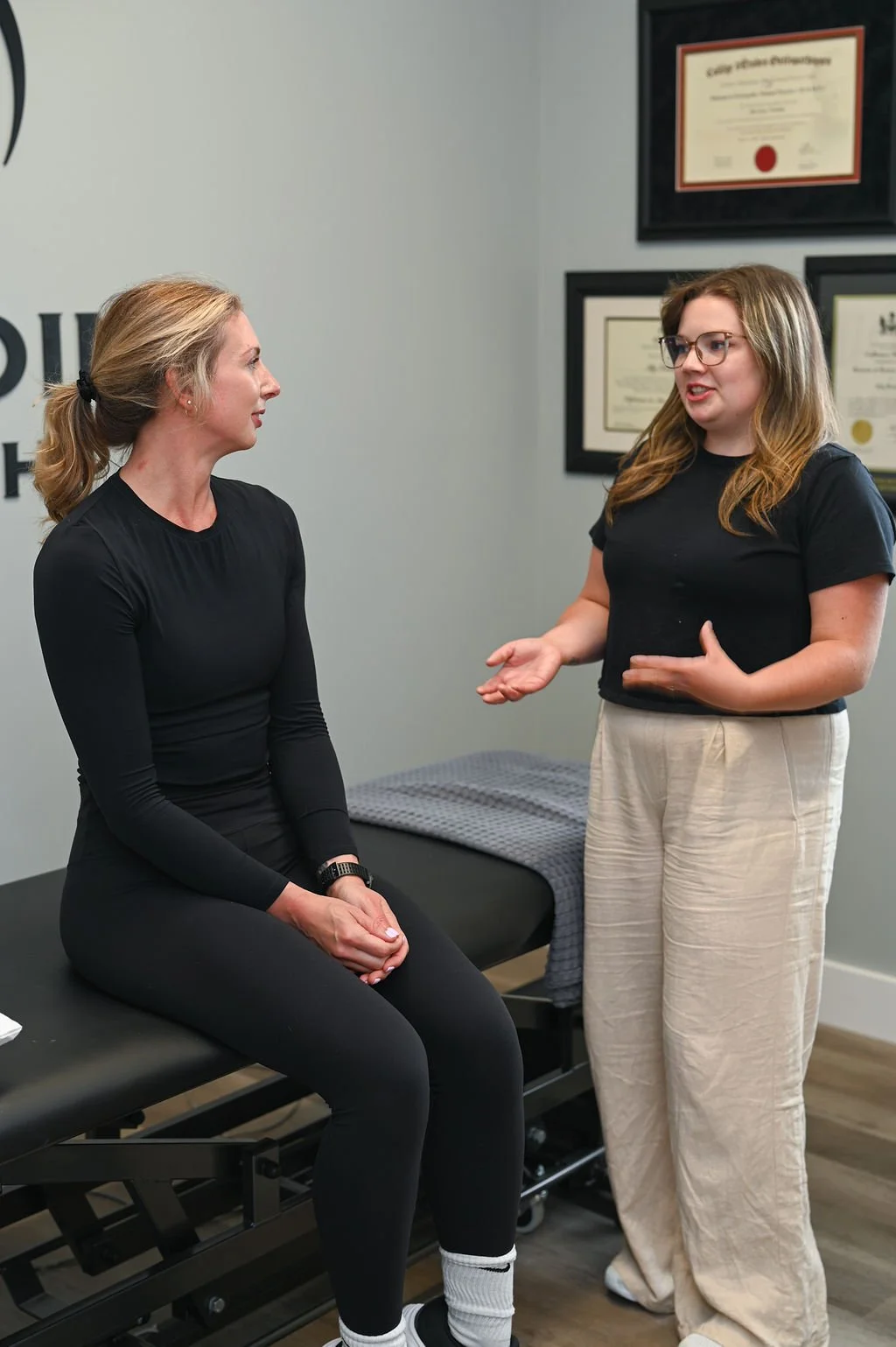
Initial Intake: During your initial intake appointment, you will sit down with Abby to review your intake form, discuss your health concerns, and explore your goals for treatment. This is also an opportunity to ask questions and share any concerns you may have. The purpose of this appointment is to identify patterns in your health and gain a deeper understanding of the factors contributing to your symptoms. Once the consultation portion of the appointment is complete, you will receive your first acupuncture treatment. Throughout the visit, Abby will explain the treatment process, answer any questions that arise, and ensure you feel informed, comfortable, and supported every step of the way.
Follow-up appointments: Follow-up appointments are designed to build on your progress and provide ongoing support as your health evolves. At the beginning of each visit, we'll take a few minutes to check in and talk about how you've been feeling since your last treatment. We'll discuss any changes you've noticed, improvements you've experienced and new concerns that may have arisen. These conversations help ensure that your treatment continues to reflect your current needs. Every appointment is tailored to you, recognizing that each patient is different, and every healing journey looks different. After checking in, Abby will provide your treatment. Throughout your care, Abby will strive to create a judge-free environment where you will be heard, supported and cared for.
-
Several factors contribute to an effective acupuncture treatment plan including needling that takes account of the whole body & following your practitioner’s instructions.
There are many different approaches to needling therapies, and each profession uses techniques that are designed to support patient care in different ways. For example, some physiotherapists and chiropractors may use a technique called dry needling, which typically focuses on specific muscles and trigger points. Family Acupuncture uses TCM and views the body as an interconnected system. While pain and muscle tension can be addressed through dry needling, treatment at Family Acupuncture takes into account overall health and other factors including sleep, stress, digestion and energy levels.
It is also important to follow the treatment plan recommended by your practitioner. Acupuncture encourages the body to make lasting changes and this can take time. In many cases, the longer a condition has been present, the longer it may take to improve.
Imagine a path in the forest that is walked everyday for several years, it becomes deeply worn down in the ground. Creating a new path will take time, repeated effort and consistency. Similarly, long-standing symptoms often need a course of treatment to achieve lasting results.
While some patients notice changes after their first treatment, chronic or complex conditions typically require a series of treatments to build and maintain progress. Following your treatment plan gives you the best opportunity to achieve the results you are looking for. .
-
Family Acupuncture does NOT currently offer direct billing. Receipts will be emailed upon payment.